Home › Soil Testing, Amendments, and Fertilization (Commercial)
We provide commercial hydroseeding soil amendments in Phoenix, AZ based on project requirements and lab testing. From lime and fertilizer applications to engineered topsoil blends, we tailor soil improvements that support specification compliant vegetation and long term site performance.
Legendary Hydroseeding Phoenix provides professional commercial hydroseeding soil amendments throughout Phoenix, AZ, Arizona and the surrounding area. Our licensed, insured crew delivers safe, clean, on-time work with a free estimate before anything begins. Call 623-323-4586 or request your free quote.
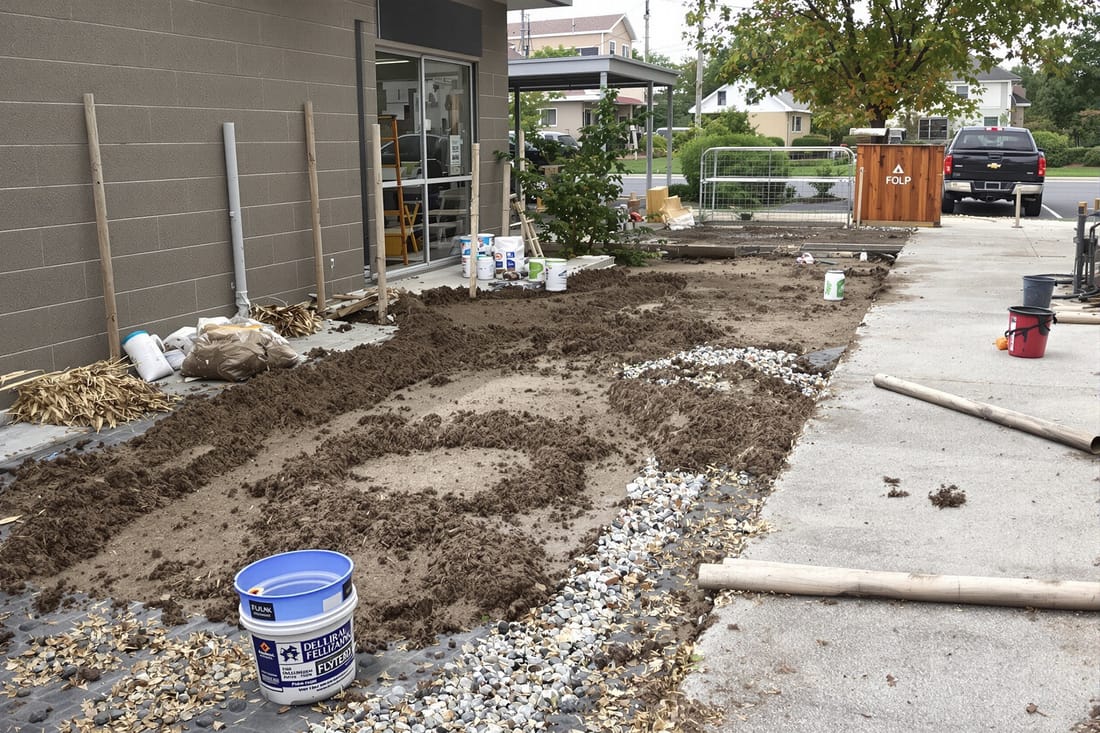
Commercial soil testing tailored to Phoenix conditions
Hydroseeding success in Phoenix starts with knowing exactly what is in your soil. Legendary Hydroseeding Phoenix does not guess. For commercial properties, we begin with a soil assessment that is specific to the Sonoran Desert climate, hard irrigation water, and imported fill soils common on local job sites.
Our team walks the site and identifies different soil zones, such as parking lot islands, perimeter slopes, detention basins, and high-traffic turf areas. We take separate core samples from each zone at multiple depths, usually 0–3 inches and 3–6 inches. This matters because Phoenix topsoil is often a thin layer of amended mix sitting on top of native caliche or compacted subgrade. If we only test the surface, we miss problems that will choke root growth.
Samples are labeled by zone and sent to a regional lab that understands desert soils. We test for pH, salinity (EC), sodium, organic matter, macro nutrients like nitrogen, phosphorus, and potassium, and key micros like iron and zinc. For reclaimed or hard well water sites, we also look closely at bicarbonates and sodium adsorption ratio. These values tell us whether the soil can support a dense hydroseeded stand or if it will crust, repel water, or burn new seedlings.
Once the results come back, we translate the lab data into a practical plan that your facilities manager or GC can actually use. Instead of handing over a confusing report, Legendary Hydroseeding Phoenix provides a simple map of the site with each zone labeled, recommended soil amendments per 1,000 square feet, and timing suggestions based on your construction or renovation schedule.
Soil amendments that work in Arizona commercial sites
The phrase "commercial hydroseeding soil amendments" covers a wide range of materials, and what works in the Midwest often fails in Phoenix. We specify products that hold up in heat, handle high salts, and fit the maintenance level of your property.
On most Phoenix commercial projects, we start by addressing pH and salinity. If the soil is too alkaline, which is common, we may recommend elemental sulfur or sulfur-coated products applied and watered in before hydroseeding. For soils with salt buildup from years of irrigation, we often specify gypsum to improve soil structure and help flush sodium, combined with deep watering cycles scheduled when temperatures are cooler.
Organic matter is usually low in our desert soils. For high-visibility turf, such as office parks and municipal campuses, we often call for screened compost or a compost-based topdressing mixed into the top 2 to 3 inches. On slopes and large basins where machinery access is limited, we may use organic-based pelletized amendments that can be spread and then incorporated lightly or left in place to break down under irrigation.
Compaction is another major issue in Phoenix construction. Heavy equipment leaves subsoils tight and sealed. Where feasible, we recommend mechanical loosening, such as deep tine aeration or ripping, prior to amendment application. This creates channels so water and roots can move, and so amendments are not just sitting on the surface. We coordinate our amendment plan with your grading and irrigation contractors so that the soil work happens at the correct stage and does not get compacted again.
Every amendment plan is scaled to the use of the space. A Class A office entry lawn may justify a more intensive program with higher rates of organic material, while a large industrial side slope might be treated with a leaner but still effective mix. Legendary Hydroseeding Phoenix designs these packages so you get measurable improvement in establishment and long term health without paying for materials your site will not benefit from.
Fertilization programs for new and existing commercial turf
Fertilization for commercial hydroseeding in Phoenix is not a one-time event. Our approach has two phases: pre-seed or at-seed fertilization, and follow-up programs for the first 12 months.
At seeding, we typically recommend a starter fertilizer that is higher in phosphorus to support root development, unless your soil tests already show very high P. In that case, we shift to a more balanced or nitrogen-lean blend to avoid runoff concerns. Starter fertilizer is usually applied in the hydroseed slurry itself on smaller sites, or broadcast on larger acreage, so that nutrients are right where emerging roots need them.
Phoenix heat and long growing seasons mean that nitrogen use patterns are very different than cooler regions. For cool-season turf like rye overseeded into bermuda, we plan for multiple light feedings in the cooler months rather than one heavy dose. For warm-season turf, we time higher nitrogen applications to active growth periods and avoid pushing growth during peak summer stress, when it can lead to disease and excessive water demand.
For commercial clients, budget and labor are always in play. Legendary Hydroseeding Phoenix can design slow-release programs that reduce the number of visits, or more granular, hands-on schedules if your in-house maintenance crew is already on site regularly. Where reclaimed water is used, we often adjust fertilizer rates downward, since reclaimed water itself can contribute some nitrogen and other nutrients.
We also address micronutrient deficiencies, which are very common in alkaline Phoenix soils. Iron chlorosis, for example, shows up as yellowing leaves even when nitrogen is adequate. Our soil testing tells us whether to use chelated iron drenches, foliar sprays, or granular blends that contain iron, manganese, and zinc, so your turf stays green without constant trial and error.
Cost drivers, scheduling, and what Phoenix property managers should plan for
Many managers ask what drives the cost of commercial hydroseeding soil amendments. The big factors are soil conditions, access, site size, and water quality.
Poor soil conditions equal more product and more labor. If tests show severe salinity, extreme pH, or very low organic matter, it takes higher amendment rates and sometimes multiple passes to correct. Easy, flat areas are less costly to treat than steep slopes, tight courtyards, or areas that require hand application because equipment cannot reach.
Access matters in Phoenix because of heat and dust. If we can get machinery like spreaders, aerators, and small tractors onto the site early in the morning, we can work more efficiently and reduce dust problems for nearby tenants. Limited access usually means more handwork and staging, which affects the budget. Water quality and volume also affect cost. Sites using reclaimed water or hard well water may need more aggressive gypsum and sulfur programs, and if irrigation coverage is weak, we often have to plan for more conservative amendment rates and possibly extra visits to adjust.
The best times of year to schedule soil correction work here are fall and early spring. In fall, soil temperatures are still warm enough for microbial activity and root growth, but air temperatures are more forgiving, which helps with leaching salts and establishing hydroseed. In early spring, we can prepare soils for late spring or early summer hydroseeding before the extreme heat kicks in. Legendary Hydroseeding Phoenix can still work in summer, but we design those programs with extra attention to irrigation scheduling, shorter work windows, and materials that tolerate heat.
If you are planning a new build or a major landscape renovation, involve soil testing and amendment planning before final grading and irrigation signoff. This allows us to integrate our recommendations into the construction sequence instead of trying to fix problems after hardscape and plantings are already in, which is usually more expensive and less effective.
Common Phoenix soil problems and how we solve them for hydroseeding
Commercial sites in Phoenix share a set of recurring soil problems, but each property shows them in different combinations. Legendary Hydroseeding Phoenix has developed specific strategies so your hydroseeded turf does not struggle from day one.
High pH and caliche layers are almost universal here. A pH above 8 ties up nutrients so plants cannot use them, even if they are technically present. We tackle this with targeted sulfur applications, organic matter to boost microbial activity, and physical breakup of hard layers where feasible. Our treatments focus on the top root zone, because that is where hydroseeded grasses must establish during the first season.
Salts from irrigation are another routine issue. Symptoms include patchy germination, weak stands near sprinkler heads, and white crust on the soil surface. We review your irrigation source and schedule, then pair gypsum or other amendments with deliberate leaching cycles done when temperatures are cooler to avoid frying young seedlings. On properties with chronic salt loads, we may recommend adjusting seed mixes toward more salt-tolerant varieties.
Compaction and poor infiltration show up in many commercial parking lot surrounds and entry lawns. Water puddles in some areas, while others stay dry even under the same system. Here, we use aeration or ripping where heavy equipment can operate, then apply amendments that take advantage of the new pore space. When machinery access is impossible, we adjust the hydroseeding mix, fertilizer rate, and irrigation cycle length to slowly improve structure rather than forcing water onto a sealed surface.
Finally, thin or imported fill soils are common on newer developments. These are often low in nutrients and organic matter, and they dry out quickly. For these, we design a front-loaded amendment program, with compost or organic granules, starter fertilizer in the hydroseed slurry, and closely spaced light irrigations to keep the top layer consistently moist without runoff. The result is a turf or groundcover area that fills in more uniformly and requires fewer reseeds and patch repairs in the first two years.