Home › Soil Amendments and Fertilization for Hydroseeding
We apply targeted hydroseeding soil amendments in Phoenix, AZ to help grass thrive in challenging desert soils. Lime, compost, and starter fertilizers are blended or applied as needed to balance pH, increase organic matter, and deliver nutrients right where new roots need them.
Legendary Hydroseeding Phoenix provides professional hydroseeding soil amendments throughout Phoenix, AZ, Arizona and the surrounding area. Our licensed, insured crew delivers safe, clean, on-time work with a free estimate before anything begins. Call 623-323-4586 or request your free quote.
Soil Problems We See Every Week in Phoenix
Phoenix soils are tough on new seed. Most yards we visit have compacted decomposed granite, caliche layers, or imported fill with almost no organic matter. If you spray hydroseed on that without soil amendments and fertilization, you usually get patchy, weak grass that burns out by summer.
At Legendary Hydroseeding Phoenix, we start by looking at what is actually in your soil. In older neighborhoods like Encanto, we often see hardpan a few inches down that roots cannot get past. In newer subdivisions in north Phoenix and Laveen, there is usually graded construction fill that sheds water instead of absorbing it. In irrigated areas near agriculture, salts can accumulate near the surface and stunt germination.
These local conditions decide which hydroseeding soil amendments you really need. The goal is to create a loose, nutrient balanced root zone at least 3 to 4 inches deep so your hydroseed can handle 110° heat, low humidity, and occasional dust storms. Without that prep, even the best seed mix and mulch will struggle.
Step 1: On Site Evaluation and Basic Soil Testing
Every soil amendment and fertilization job we do in Phoenix starts with a simple on site evaluation. We walk the property, look for drainage problems, and take a shovel or probe to see how deep the hard layer is. If the tool stops after 2 inches, we know root growth will be limited unless we address compaction.
We usually perform a basic field test of soil texture. We look at how it crumbles in the hand, whether it stays in a tight ball, or falls apart like sand. For many projects, we also recommend a lab test for pH, salinity (EC), and major nutrient levels (N, P, K) plus organic matter. This is especially important around older irrigated lots or where customers have had repeated lawn failures.
The lab test guides us on how aggressive we need to be with lime, gypsum, sulfur, or organic matter. For example, high pH with heavy salts near Glendale or Tolleson often calls for gypsum to improve structure and help leach salts, not more fertilizer that will just build up. Slightly alkaline but low organic matter in central Phoenix is more about compost and balanced starter fertilizer. We explain the test results in plain language before we start, so you know what you are paying for and why.
Step 2: Mechanical Prep and Amendment Blending
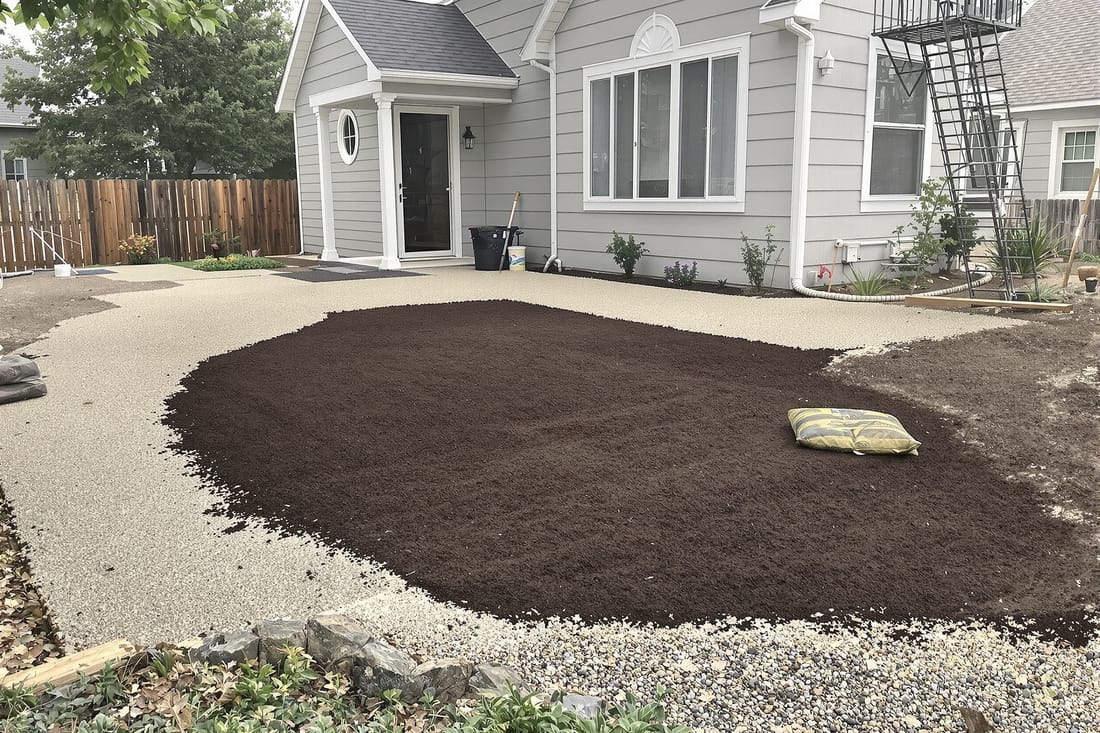
Once we know what the soil needs, Legendary Hydroseeding Phoenix focuses on physical prep before we ever bring the hydroseeder on site. For small residential yards, we typically use a power rake or rototiller to break up the top 3 to 4 inches. On larger lots or commercial sites, we may bring in heavier equipment to scarify compacted areas and knock down high spots to ensure consistent irrigation coverage.
Next, we spread the recommended hydroseeding soil amendments across the area. Common materials in Phoenix include screened compost, gypsum, elemental sulfur when pH is very high, and sometimes a small amount of clean topsoil in dead spots where nothing has grown for years. The quantities are not random. For example, a typical front yard rehab might get 1 to 2 cubic yards of compost per 1,000 square feet, tilled into the top few inches, while gypsum rates are usually set in pounds per 1,000 square feet based on soil test results.
We incorporate these materials using tillers or soil cultivators, then grade the surface to a smooth, firm finish that you can walk on without sinking but still leaves a slight footprint. This balance is important. If the soil is left too fluffy, it settles unevenly and creates low spots that hold water. If it is compacted again, roots stay shallow and the lawn fails the first time irrigation is reduced or a heat wave hits.
Fertilizer Choices and How We Apply Them for Hydroseeding
Hydroseeding is not just spraying seed and mulch. The fertilizer in the mix is critical, since it feeds the seedlings during their most vulnerable stage. At Legendary Hydroseeding Phoenix, we match fertilizer type and rate to your soil test, the seed blend, and your irrigation schedule.
For most new hydroseed lawns, we use a high phosphorus starter fertilizer to support strong root development, plus moderate nitrogen for early growth. On sandy or very low organic matter sites, we often choose a slow release nitrogen source so it does not leach out under frequent light watering. In higher salt areas, we reduce total application rates and may split fertilizer into two lighter passes, one in the slurry and one as a dry application 3 to 4 weeks after germination, to avoid burning tender seedlings.
We blend granular fertilizer into the soil before hydroseeding when possible, then add a complementary liquid or soluble fertilizer directly into the hydroseeder tank. This puts nutrients right at the seed and helps ensure even distribution across the entire area. We avoid “one size fits all” bags from big box stores and instead use formulations that are proven to work with desert soils and reclaimed or hard municipal water, which are common in much of Phoenix.
We also talk with you about ongoing fertilization. New hydroseed lawns in the Phoenix climate usually need a second feeding about 4 to 6 weeks after germination, once the first mow has been completed. Skipping this step is one of the main reasons otherwise good hydroseed jobs thin out by the end of the first summer.
Dealing With Phoenix Specific Issues: Heat, Salts, and Water Limits
Phoenix lawns face problems that cooler, wetter regions never see. When we plan soil amendments and fertilization for hydroseeding, we account for three local realities: extreme heat, high salt risk, and water restrictions.
Heat and low humidity dry the top half inch of soil quickly, which is exactly where new seeds are sitting. By increasing organic matter and improving structure, we help the soil hold moisture around the seed without creating a muddy surface. In some projects, we also recommend a soil surfactant in the hydroseeding mix, which helps water penetrate instead of beading up on dusty or hydrophobic soil.
Salts can come from past over fertilization, poor drainage, or the water supply itself. If a soil test shows elevated salts, our first focus is on gypsum and drainage rather than immediately adding more fertilizer. We may suggest a flush irrigation cycle before seeding, especially on flat lots, to push salts below the seed zone. We are up front that this extra step adds some water cost but protects your investment in the new lawn.
Many Phoenix customers work within strict watering windows or HOA rules. We design the soil amendment and fertilization plan to match what you can realistically maintain. For example, if you cannot water 4 to 5 times a day during germination, we usually increase organic matter and adjust mulch thickness in the hydroseed mix so the soil stays moist longer. It is better to engineer the soil to work with your schedule than to pretend ideal conditions exist when they do not.
Costs, Scheduling, and What You Should Decide Before We Start
The cost of soil amendments and fertilization for hydroseeding in Phoenix varies widely, and Legendary Hydroseeding Phoenix is direct about what drives the price. Major factors include square footage, how compacted the soil is, whether we need machine grading, the amount and type of compost or topsoil required, and any special materials such as large gypsum applications or organic only fertilizers.
For a typical residential front and back yard, soil prep and amendments may be a similar or even larger portion of the total bill than the hydroseeding itself. Customers are sometimes surprised by this, but the prep is what decides whether the lawn lasts more than one season. We give itemized estimates so you see exactly how much is tied to soil work, fertilizer, and the hydroseed slurry.
Scheduling in Phoenix is also important. The best windows for hydroseeding with full soil amendment and fertilization work are early spring and early fall, when soil temperatures are warm enough for germination but daytime highs are not pushing seedlings to the edge. Summer jobs can still succeed, but we may recommend additional compost, slightly heavier mulch in the hydroseed mix, and more careful watering.
Before you hire anyone, decide how you will handle irrigation, whether you can keep pets off the area for several weeks, and if you prefer synthetic or organic leaning fertilizer programs. Tell us your long term plan, such as whether this is a showpiece lawn or a low input play area, and we will customize the amendment and fertilization approach to match. That clarity up front saves money and prevents rework later.